Published by IVANA MD | Women’s Health | Missouri City, TX
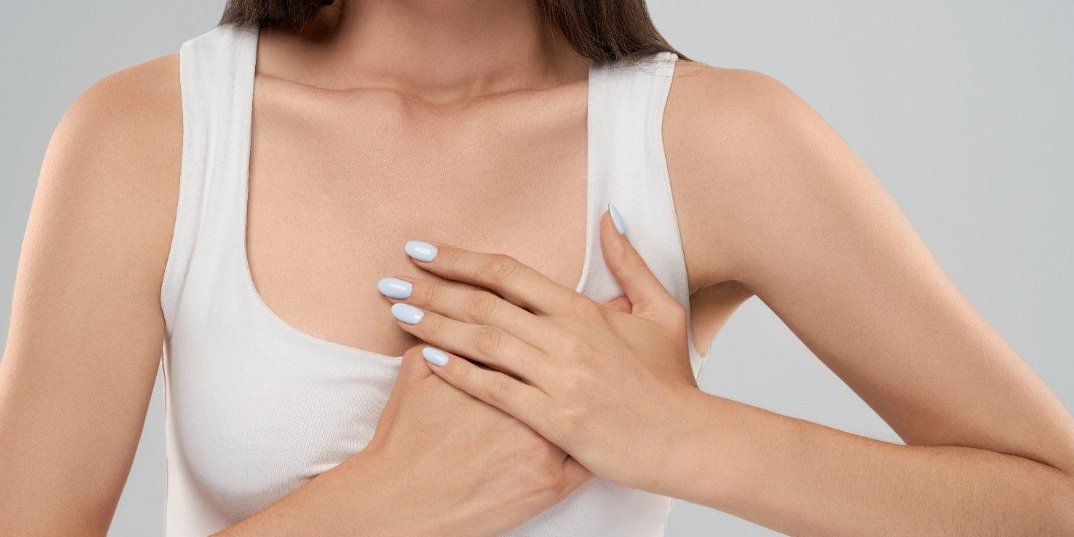
Breast self-examination (BSE) is one of the simplest, most empowering things a woman can do for her health. While it does not replace mammograms or clinical breast exams, it helps you understand what is normal for your body so you can quickly notice when something changes.
According to the American Cancer Society, about 40% of diagnosed breast cancers are first detected by women who felt a lump during a self-exam. Early detection remains one of the most powerful factors in successful breast cancer treatment.
When Should You Do a Breast Self-Exam?
The best time to perform a breast self-exam is 7 to 10 days after the first day of your period, when breasts are least likely to be swollen or tender. If you are postmenopausal, pick the same day every month, the first day of the month is an easy habit to build.
How to Perform a Breast Self-Exam
Step 1: Visual Check in the Mirror
Stand undressed from the waist up in front of a mirror with good lighting.
Look for:
- Any changes in size, shape, or symmetry
- Skin dimpling, puckering, or unusual texture
- Nipple changes: inversion, discharge, or scaling
- Redness, swelling, or visible lumps
Do this in three positions: arms at your sides, arms raised above your head, and hands pressed firmly on your hips.
Step 2: Feel While Standing or in the Shower
Many women find it easiest to examine themselves in the shower when skin is wet and fingers glide smoothly.
- Use the pads of your three middle fingers (not the tips)
- Apply three levels of pressure: light (for tissue just under the skin), medium (for deeper tissue), and firm (to feel tissue closest to the chest wall)
- Move in small circular motions, about the size of a dime
- Cover the entire breast using an up-and-down vertical strip pattern — research shows this method detects more of the breast tissue than circular patterns
Make sure to cover from your collarbone down to the top of your abdomen, and from your armpit to your sternum (breastbone).
Step 3: Feel While Lying Down
Lying down spreads breast tissue more evenly across the chest wall, making it easier to feel changes.
- Place a pillow under your right shoulder and your right arm behind your head
- Use your left hand to examine your right breast using the same circular motion and pressure levels
- Repeat on the other side
Don’t forget to check your armpits and the area around your collarbone. Lymph nodes in these areas can also indicate changes in breast health.
What Are You Looking For?
Most lumps are not cancer, many are cysts or benign fibroadenomas. However, you should contact your doctor if you notice:
- A new lump or thickening that feels different from surrounding tissue
- Skin that looks like an orange peel (peau d’orange)
- A nipple that suddenly turns inward
- Bloody or clear nipple discharge
- Persistent pain in one specific spot
- Any lump in the armpit
What Does the Research Say?
A landmark study published in the Journal of the National Cancer Institute found that women who performed regular breast self-exams were more likely to detect smaller tumors at earlier stages compared to those who did not. While the debate around BSE continues in medical literature, most gynecologists and oncologists agree that breast self-awareness, knowing your normal is an essential component of overall breast health.
The World Health Organization (WHO) recommends breast self-examination as a valuable practice for raising awareness of breast health, particularly in settings where access to regular clinical screening may be limited.
Additionally, a 2015 review in The Breast journal confirmed that early-stage breast cancer detection significantly improves survival rates, with 5-year survival rates exceeding 99% when cancer is caught at a localized stage.
Self-Exam Is Not Enough on Its Own
Breast self-exams are a valuable starting point, but they work best as part of a broader screening routine:
- Ages 20–39: Clinical breast exam every 1–3 years; monthly self-exams.
- Ages 40+: Annual mammogram recommended; monthly self-exams.
- High-risk women: May need MRI in addition to mammogram.Discuss with your doctor.
When to See Your Doctor Immediately
Do not wait for your next scheduled appointment if you notice any sudden or unexplained changes. Early evaluation gives you the best possible outcomes. A same-week appointment is always worth it for peace of mind.
Knowing your body is the first step in protecting it. A few minutes each month can make a life-changing difference.
Schedule your women’s health appointment with IVANA MD in Missouri City, TX.
Expert, compassionate women’s health care including breast health evaluations, gynecological exams, and preventive screenings.
Call: 346-585-4077
Address: 4220 Cartwright Road, Suite 201, Missouri City, Texas 77459
Don’t wait. Your health is worth that call.
This blog is for informational purposes only and does not constitute medical advice. Please consult a qualified healthcare provider for diagnosis and treatment.
References
Mayo Clinic (2024). Breast self-exam for breast awareness https://www.mayoclinic.org/tests-procedures/breast-exam/about/pac-20393237
American Cancer Society (ACS). (2022). Breast Cancer Facts & Figures 2022-2024. American Cancer Society, Inc. https://www.cancer.org/content/dam/cancer-org/research/cancer-facts-and-statistics/breast-cancer-facts-and-figures/2022-2024-breast-cancer-fact-figures-acs.pdf
Cleveland Clinic (2023). Breast Self‑Exam: Purpose, Steps & How‑To. https://my.clevelandclinic.org/health/diagnostics/3990-breast-self-exam
Allegra, A., & Peccatori, F. A. (2015). Early detection and survival rates in breast cancer: A systematic review. The Breast, 24(5), 533–541 https://thebreastonline.com