Uterine fibroids, also called leiomyomas or myomas, are among the most common benign (non-cancerous) tumors in women of reproductive age. According to the National Institutes of Health (NIH), up to 80% of women will develop fibroids by age 50. Despite how widespread they are, many women are unaware they have fibroids, while others experience debilitating symptoms that significantly impact their quality of life. Whether you have just been diagnosed or are researching symptoms, this comprehensive guide covers everything you need to know about fibroid size, fibroid pain, and the latest fibroid treatment options including minimally invasive procedures available right here in Missouri City, Texas.
What Are Uterine Fibroids?
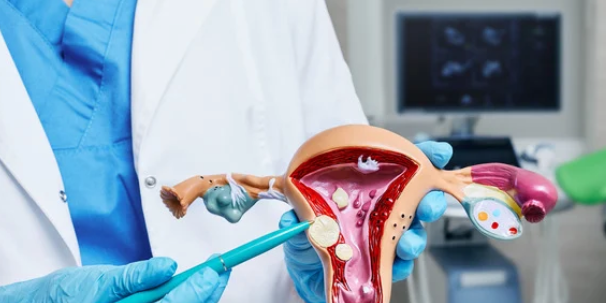
Fibroids are non-cancerous growths composed of smooth muscle cells and fibrous connective tissue that develop within or around the uterus. They are classified by location:
- Intramural fibroids – grow within the muscular wall of the uterus (most common)
- Subserosal fibroids – develop on the outer surface of the uterus
- Submucosal fibroids – grow just beneath the inner lining of the uterus (most likely to cause heavy bleeding)
- Pedunculated fibroids – attached to the uterus by a stalk-like projection
Research published in the American Journal of Obstetrics and Gynecology confirms that African American women are 2–3 times more likely to develop fibroids and at a younger age, with more severe symptoms, compared to white women. Hormones, especially estrogen and progesterone play a key role in fibroid growth.
Fibroid Size: From Tiny to Large. What It Means for Your Health
Fibroid size varies enormously from as small as a seedling to larger than a grapefruit. Doctors typically classify them as:
- Small fibroids: Less than 1 cm (under 0.5 inches)
- Medium fibroids: 1–5 cm (roughly the size of a grape to a lime)
- Large fibroids: 5–10 cm (similar to an orange)
- Giant fibroids: Over 10 cm (larger than a grapefruit)
Size alone does not always determine severity of symptoms. A small submucosal fibroid can cause heavier bleeding than a large subserosal fibroid. However, large fibroids can cause significant pelvic pressure, bladder issues, and bowel changes. Studies show that fibroids larger than 5 cm are more often associated with bulk-related symptoms such as frequent urination, constipation, and abdominal distension.
Key Fact: A fibroid that weighs several pounds can enlarge the uterus to the size of a 5-month pregnancy, causing significant abdominal bloating and discomfort.
Fibroid Pain: Understanding Your Symptoms
Fibroid pain is one of the most frequently reported and misunderstood symptoms. Pain can be chronic or acute and varies significantly from woman to woman. Common fibroid-related pain includes:
Pelvic Pressure and Heaviness
Large fibroids pressing against surrounding organs create a persistent feeling of fullness or pelvic pressure, often mistaken for bloating or weight gain.
Dysmenorrhea (Painful Periods)
Submucosal and intramural fibroids frequently cause painful menstrual cramps that are far more intense than typical period pain. A 2017 study in Fertility and Sterility found that women with fibroids had significantly higher rates of severe dysmenorrhea compared to those without.
Painful Intercourse (Dyspareunia)
Fibroids located near the cervix or within the uterine wall can make sexual intercourse uncomfortable or painful, affecting intimate relationships and mental health.
Back and Leg Pain
Posterior (back-facing) fibroids can press against spinal nerves, causing radiating lower back pain, hip pain, or even pain down the legs symptoms frequently misattributed to orthopedic conditions.
Acute Fibroid Pain — Degeneration
When a fibroid outgrows its blood supply, it undergoes degeneration (cell death), causing sudden, severe localized pain. This is more common during pregnancy. Pedunculated fibroids can also twist, causing acute pain requiring prompt medical evaluation.
Did You Know? Heavy menstrual bleeding (menorrhagia) affects up to 30% of women with fibroids and is a leading cause of iron-deficiency anemia, a serious but often overlooked complication.
How Are Fibroids Diagnosed?
Accurate diagnosis is the first step to effective treatment. At IVANA MD, we use the latest diagnostic tools to fully evaluate your fibroid burden:
- Pelvic ultrasound – the most common first-line imaging test
- Transvaginal ultrasound – provides a closer, more detailed view of the uterus
- MRI (Magnetic Resonance Imaging) – the gold standard for mapping fibroid size, number, and location before treatment
- Sonohysterography (saline infusion sonogram) – helps identify submucosal fibroids affecting the uterine cavity
- Hysteroscopy – direct visualization of the uterine lining
A thorough diagnosis allows your provider to tailor a treatment plan based on your specific fibroid profile, fertility goals, and symptom severity.
Fibroid Treatment Options: From Watchful Waiting to Surgery
The good news: fibroid treatment options have expanded dramatically in recent years. Not every fibroid requires treatment, the right plan depends on your symptoms, fibroid size, age, and family planning goals.
1. Watchful Waiting (Active Surveillance)
If your fibroids are small and asymptomatic, your doctor may recommend monitoring with periodic ultrasounds. Fibroids often shrink naturally after menopause as estrogen levels decline.
2. Medications
Several medications help manage fibroid symptoms, though they do not eliminate fibroids permanently:
- Hormonal birth control (pills, IUD, patch) – reduces bleeding and pelvic pain
- GnRH agonists (e.g., Lupron) – temporarily shrink fibroids by lowering estrogen; used pre-surgically
- Tranexamic acid – reduces heavy menstrual bleeding
- Elagolix (Oriahnn) – an FDA-approved oral medication specifically for fibroid-associated heavy bleeding
- Iron supplements – treat fibroid-induced anemia
3. Minimally Invasive Procedures
These outpatient or short-stay procedures have revolutionized fibroid care with shorter recovery times and uterus-preserving options:
- Uterine Fibroid Embolization (UFE) – an interventional radiology procedure that blocks blood flow to fibroids, causing them to shrink. Studies show 85–90% of women report significant symptom improvement.
- MRI-guided Focused Ultrasound (MRgFUS) – uses ultrasound waves to heat and destroy fibroid tissue without incisions
- Radiofrequency Ablation (Acessa, Sonata) – delivers heat energy directly to fibroids to shrink them; FDA-approved and highly effective for intramural and submucosal fibroids
- Endometrial Ablation – destroys the uterine lining to reduce or eliminate heavy periods; not recommended if future pregnancy is desired
4. Surgical Options
- Myomectomy – surgical removal of fibroids while preserving the uterus; ideal for women who wish to conceive. Can be performed via hysteroscopy, laparoscopy, or open surgery depending on fibroid type and size.
- Hysterectomy – complete removal of the uterus; the only permanent cure for fibroids. Recommended for women who have completed childbearing and have severe, treatment-resistant symptoms.
Research Insight: A landmark 2020 study in JAMA Network Open found that women who underwent uterine-sparing procedures (UFE or myomectomy) had comparable symptom relief to hysterectomy with significantly shorter recovery and lower surgical risk.
Fibroids and Fertility: What You Need to Know
Many women with fibroids conceive naturally without complications. However, fibroids, particularly submucosal fibroids, can interfere with implantation and increase the risk of miscarriage, preterm labor, and fetal malpresentation. If you are trying to conceive and have been diagnosed with fibroids, it is essential to consult a women’s health specialist to evaluate whether treatment before pregnancy is advisable.
Research published in Human Reproduction Update confirms that surgical removal of submucosal fibroids significantly improves pregnancy rates in women undergoing IVF.
Fibroid Risk Factors You Should Know
- Age (peak incidence: 30s–40s)
- African American ethnicity
- Family history of fibroids
- Obesity and high BMI
- Early onset of menstruation (before age 10)
- Diet high in red meat and low in green vegetables and fruits
- Vitamin D deficiency
- High blood pressure (hypertension)
A 2022 study in the Journal of Women’s Health highlighted that Vitamin D deficiency is strongly associated with a higher fibroid burden, suggesting supplementation may be a simple, low-cost preventive strategy.
When Should You See a Doctor for Fibroids?
Do not normalize pelvic pain or heavy periods. You should seek evaluation if you experience any of the following:
- Periods lasting more than 7 days
- Soaking through a pad or tampon within an hour or less
- Pelvic pain or pressure that interferes with daily activities
- Frequent urination or difficulty emptying the bladder
- Lower back pain with no clear orthopedic cause
- Pain during intercourse
- Difficulty getting pregnant or recurrent miscarriages
- A feeling of fullness or bloating in the lower abdomen
Remember: Fibroids are highly treatable. Early diagnosis leads to more treatment options and better outcomes.
Why Choose IVANA MD for Fibroid Care in Missouri City, TX?
At IVANA MD, we understand that every woman’s experience with fibroids is unique. Our approach combines compassionate, personalized care with the latest evidence-based treatments. We take time to listen to your symptoms, review your complete history, and develop a customized plan that aligns with your health goals and lifestyle, whether that means managing symptoms medically, pursuing a minimally invasive procedure, or exploring surgical options.
Don’t wait to get the care you deserve. Fibroid symptoms are real, common, and treatable. Our team at IVANA MD is here to help you understand your options and take control of your health. Contact us today to schedule your comprehensive women’s health evaluation.
Schedule your women’s health appointment with IVANA MD in Missouri City, TX.
Call: (346) 585-4077
4220 Cartwright Road, Suite 201 Missouri City, Texas 77459
References
- Baird DD, Dunson DB, Hill MC, Cousins D, Schectman JM. High cumulative incidence of uterine leiomyoma in black and white women: ultrasound evidence. Am J Obstet Gynecol. 2003;188(1):100-107. doi:10.1067/mob.2003.99 Available at: https://doi.org/10.1067/mob.2003.99
- Uimari O, Subramaniam KS, Awosanya OG, et al. Uterine fibroids and the risk of hysterectomy: a systematic review and meta-analysis. Hum Reprod Update. 2022;28(4):520-543. doi:10.1093/humupd/dmac016 Available at: https://doi.org/10.1093/humupd/dmac016
- National Institute of Environmental Health Sciences. Uterine Fibroids. National Institutes of Health. Updated 2023. Available at: https://www.niehs.nih.gov/health/topics/conditions/fibroids
- Stewart EA, Cookson CL, Gandolfo RA, Schulze-Rath R. Epidemiology of uterine fibroids: a systematic review. BJOG. 2017;124(10):1501-1512. doi:10.1111/1471-0528.14640 Available at: https://doi.org/10.1111/1471-0528.14640
- Dueholm M, Lundorf E, Hansen ES, Ledertoug S, Olesen F. Accuracy of magnetic resonance imaging and transvaginal ultrasonography in the diagnosis, mapping, and measurement of uterine myomas. Am J Obstet Gynecol. 2002;186(3):409-415. doi:10.1067/mob.2002.121712 Available at: https://doi.org/10.1067/mob.2002.121712
- Lippman SA, Warner M, Samuels S, Olive D, Vercellini P, Eskenazi B. Uterine fibroids and gynecologic pain symptoms in a population-based study. Fertil Steril. 2003;80(6):1488-1494. doi:10.1016/j.fertnstert.2003.05.016 Available at: https://doi.org/10.1016/j.fertnstert.2003.05.016
- Munro MG, Critchley HO, Fraser IS; FIGO Menstrual Disorders Working Group. The FIGO classification of causes of abnormal uterine bleeding in the reproductive years. Fertil Steril. 2011;95(7):2221-2228.e3. doi:10.1016/j.fertnstert.2011.03.079 Available at: https://doi.org/10.1016/j.fertnstert.2011.03.079
- Zimmermann A, Bernuit D, Gerlinger C, Schaefers M, Geppert K. Prevalence, symptoms and management of uterine fibroids: an international internet-based survey of 21,746 women. BMC Womens Health. 2012;12:6. doi:10.1186/1472-6874-12-6 Available at: https://doi.org/10.1186/1472-6874-12-6
- Soliman AM, Yang H, Du EX, Kelkar SS, Winkel C. The direct and indirect costs of uterine fibroid tumors: a systematic review of the literature between 2000 and 2013. Am J Obstet Gynecol. 2015;213(2):141-160. doi:10.1016/j.ajog.2015.03.019 Available at: https://doi.org/10.1016/j.ajog.2015.03.019
- Laughlin-Tommaso SK, Jacoby VL, Myers ER. Disparities in fibroid burden in the United States. Am J Obstet Gynecol. 2017;216(6):593-600. doi:10.1016/j.ajog.2017.02.020 Available at: https://doi.org/10.1016/j.ajog.2017.02.020
- Van den Bosch T, Dueholm M, Leone FP, et al. Terms, definitions and measurements to describe sonographic features of myometrium and uterine masses: a consensus opinion from the Morphuterus group. Ultrasound Obstet Gynecol. 2015;46(3):284-298. doi:10.1002/uog.14806 Available at: https://doi.org/10.1002/uog.14806
- Wilde S, Scott-Barrett S. Radiological appearances of uterine fibroids. Indian J Radiol Imaging. 2009;19(3):222-231. doi:10.4103/0971-3026.54877 Available at: https://doi.org/10.4103/0971-3026.54877
- American College of Obstetricians and Gynecologists. ACOG Practice Bulletin No. 228: Uterine Leiomyomas. Obstet Gynecol. 2021;137(6):e100-e115. doi:10.1097/AOG.0000000000004400 Available at: https://doi.org/10.1097/AOG.0000000000004400
- Marsh EE, Al-Hendy A, Kappus D, et al. Burden, prevalence, and treatment of uterine fibroids: a survey of U.S. women. J Womens Health (Larchmt). 2018;27(11):1359-1367. doi:10.1089/jwh.2018.7076 Available at: https://doi.org/10.1089/jwh.2018.7076
- Bbroumas A, Filipidis AS. Uterine fibroid embolization: a review of current evidence and future directions. Cardiovasc Intervent Radiol. 2020;43(7):971-982. doi:10.1007/s00270-020-02481-z Available at: https://doi.org/10.1007/s00270-020-02481-z
- Hehenkamp WJ, Volkers NA, Donderwinkel PF, et al. Uterine artery embolization versus hysterectomy in the treatment of symptomatic uterine fibroids (EMMY trial): peri- and postprocedural results from a randomized controlled trial. Am J Obstet Gynecol. 2005;193(5):1618-1629. doi:10.1016/j.ajog.2005.05.017 Available at: https://doi.org/10.1016/j.ajog.2005.05.017
- Donnez J, Dolmans MM. Uterine fibroid management: from the present to the future. Hum Reprod Update. 2016;22(6):665-686. doi:10.1093/humupd/dmw023 Available at: https://doi.org/10.1093/humupd/dmw023
- U.S. Food and Drug Administration. FDA Approves New Option to Treat Heavy Menstrual Bleeding Associated with Uterine Fibroids in Premenopausal Women. FDA News Release. 2020. Available at: https://www.fda.gov/news-events/press-announcements/fda-approves-new-option-treat-heavy-menstrual-bleeding-associated-uterine-fibroids-premenopausal
- Bhave Chittawar P, Franik S, Pouwer AW, Farquhar C. Minimally invasive surgical techniques versus open myomectomy for uterine fibroids. Cochrane Database Syst Rev. 2014;10:CD004638. doi:10.1002/14651858.CD004638.pub3 Available at: https://doi.org/10.1002/14651858.CD004638.pub3
- Laughlin-Tommaso SK, Khan Z, Weaver AL, Schleck CD, Rocca WA, Stewart EA. Cardiovascular and metabolic morbidity after hysterectomy with or without oophorectomy compared with matched controls. Menopause. 2018;25(5):483-492. doi:10.1097/GME.0000000000001043 Available at: https://doi.org/10.1097/GME.0000000000001043
- Jacoby VL, Jacoby A, Learman LA, et al. Use of medical, surgical and complementary treatments among women with fibroids. Eur J Obstet Gynecol Reprod Biol. 2014;182:220-225. doi:10.1016/j.ejogrb.2014.09.026 Available at: https://doi.org/10.1016/j.ejogrb.2014.09.026
- Spies JB, Bradley LD, Guido R, Maxwell GL, Levine BA, Coyne K. Outcomes from leiomyoma therapies: comparison with normal controls. Obstet Gynecol. 2010;116(3):641-652. doi:10.1097/AOG.0b013e3181ed36b2 Available at: https://doi.org/10.1097/AOG.0b013e3181ed36b2
- Sunkara SK, Khairy M, El-Toukhy T, Khalaf Y, Coomarasamy A. The effect of intramural fibroids without uterine cavity involvement on the outcome of IVF treatment: a systematic review and meta-analysis. Hum Reprod. 2010;25(2):418-429. doi:10.1093/humrep/dep396 Available at: https://doi.org/10.1093/humrep/dep396
- Pritts EA, Parker WH, Olive DL. Fibroids and infertility: an updated systematic review of the evidence. Fertil Steril. 2009;91(4):1215-1223. doi:10.1016/j.fertnstert.2008.01.051 Available at: https://doi.org/10.1016/j.fertnstert.2008.01.051
- Al-Hendy A, Badr M. Can vitamin D reduce the risk of uterine fibroids? Womens Health (Lond). 2014;10(4):353-358. doi:10.2217/whe.14.29 Available at: https://doi.org/10.2217/whe.14.29
- Wise LA, Radin RG, Palmer JR, Kumanyika SK, Boggs DA, Rosenberg L. African American women’s dietary intake in relation to risk of uterine leiomyomata. Am J Epidemiol. 2011;174(12):1329-1340. doi:10.1093/aje/kwr279 Available at: https://doi.org/10.1093/aje/kwr279
- Chiaffarino F, Parazzini F, La Vecchia C, Marsico S, Surace M, Ricci E. Use of oral contraceptives and uterine fibroids: results from a case-control study. Br J Obstet Gynaecol. 1999;106(8):857-860. doi:10.1111/j.1471-0528.1999.tb08412.x Available at: https://doi.org/10.1111/j.1471-0528.1999.tb08412.x
- Haan YC, Oudman I, de Lange ME, Timmermans A, Ankum WM, van Montfrans GA. Hypertension risk in Dutch women with symptomatic uterine fibroids. Am J Hypertens. 2015;28(4):487-492. doi:10.1093/ajh/hpu187 Available at: https://doi.org/10.1093/ajh/hpu187
- Eltoukhi HM, Modi MN, Weston M, Armstrong AY, Stewart EA. The health disparities of uterine fibroid tumors for African American women: a public health issue. Am J Obstet Gynecol. 2014;210(3):194-199. doi:10.1016/j.ajog.2013.08.008 Available at: https://doi.org/10.1016/j.ajog.2013.08.008
- Stanhiser J, Steiner AZ. Psychosocial aspects of uterine fibroids. Curr Opin Obstet Gynecol. 2021;33(6):413-417. doi:10.1097/GCO.0000000000000743 Available at: https://doi.org/10.1097/GCO.0000000000000743
This blog post is for informational purposes only and does not replace professional medical advice. Always consult with a qualified healthcare provider for diagnosis and treatment of health concerns.
Other Related Topics That Might Interest You
What Causes Irregular Periods and When to See a Doctor
Can Birth Control Help with Endometriosis?
Treating Endometriosis: Available Options
How Local Gynecology Improves Outcomes vs. Hospital Systems
What Missouri City Women Should Know About Annual Gynecological Exams