Women’s Health | IVANA MD | Missouri City, TX
If you have been looking for natural ways to support your hormones, you may have heard that meditation can help “balance” them. While meditation cannot directly correct a hormonal imbalance, it may support your overall health by reducing stress, improving emotional wellbeing, and potentially influencing the body’s stress response.
How Stress Affects Hormones
When you experience stress, your body activates the stress-response system, which includes the hypothalamus, pituitary gland, and adrenal glands. This process increases hormones such as cortisol to help your body respond to stress.
Short-term stress is normal. However, significant or prolonged stress can affect sleep, mood, appetite, and, in some women, menstrual function. Severe stress can interfere with the communication between the brain and ovaries that helps regulate the menstrual cycle.
This does not mean that stress is responsible for every hormonal symptom. Irregular periods, fatigue, acne, weight changes, and other symptoms can have many different causes.
Can Meditation Lower Cortisol?
Some research suggests that mindfulness and meditation may reduce perceived stress and may influence cortisol and other measures of the body’s stress response. However, results are not completely consistent, and meditation should not be considered a treatment for abnormal cortisol levels.
The same applies to reproductive hormones. There is currently not enough evidence to say that meditation directly increases estrogen, raises progesterone, or “balances” reproductive hormones.
Its potential benefit may be more indirect: helping you manage stress, sleep better, and improve your overall wellbeing.
Meditation and Women’s Health
A regular mindfulness practice may be helpful for:
- Managing stress and anxiety
- Supporting better sleep
- Improving emotional wellbeing
- Coping with some symptoms associated with menopause
- Developing healthier stress-management habits
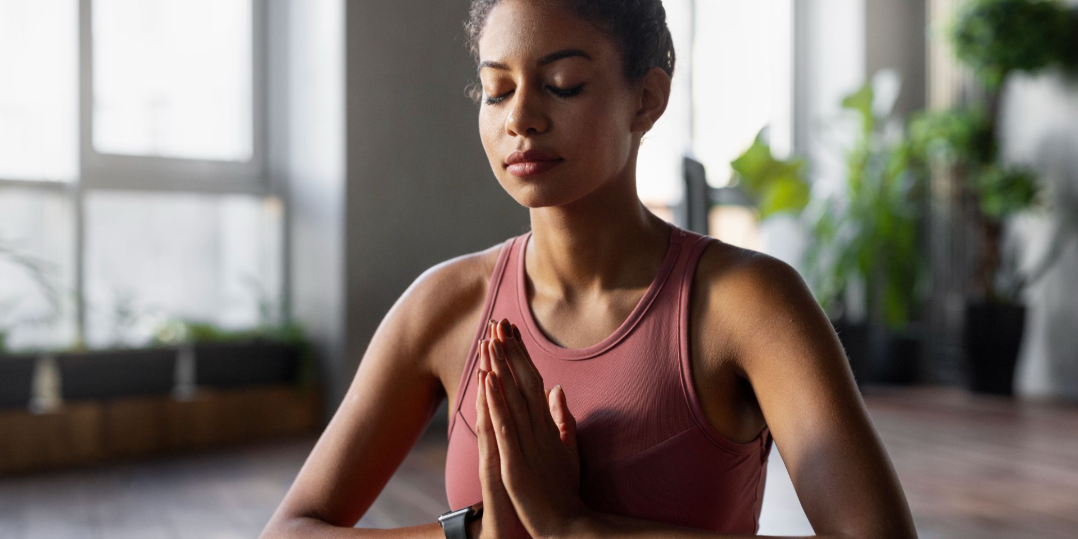
You do not need to meditate for a long time to get started. Try five to ten minutes a day in a quiet place. Focus on your breathing and gently bring your attention back whenever your mind wanders. Guided meditation can also be helpful if you are new to the practice.
When to Talk to Your Doctor
Meditation can be a useful addition to a healthy lifestyle, but it should not replace medical evaluation when you have concerning symptoms.
Talk with your healthcare provider if you experience persistent irregular or missed periods, very heavy bleeding, unexplained weight changes, significant fatigue, new excessive hair growth or acne, difficulty becoming pregnant, or other symptoms that concern you.
These symptoms can have many causes, including PCOS, thyroid disorders, perimenopause, medication effects, and other medical conditions.
The Bottom Line
Meditation does not directly “balance your hormones.” However, it may help reduce stress and support sleep and emotional wellbeing, which are all important parts of women’s health.
Think of meditation as one tool in your overall wellness routine—not a replacement for appropriate medical care.
📍 Schedule your women’s health appointment with IVANA MD in Missouri City, TX. 📞 346-585-4077. 4220 Cartwright Road, Suite 201, Missouri City, Texas 77459.
References:
Pascoe, M. C., Thompson, D. R., Jenkins, Z. M., & Ski, C. F. (2017). Mindfulness mediates the physiological markers of stress: Systematic review and meta-analysis. Journal of Psychiatric Research, 95, 156–178. https://doi.org/10.1016/j.jpsychires.2017.08.004
Goyal, M., Singh, S., Sibinga, E. M. S., et al. (2014). Meditation programs for psychological stress and well-being: A systematic review and meta-analysis. JAMA Internal Medicine, 174(3), 357–368. https://doi.org/10.1001/jamainternmed.2013.13018
Hofmann, S. G., Sawyer, A. T., Witt, A. A., & Oh, D. (2010). The effect of mindfulness-based therapy on anxiety and depression: A meta-analytic review. Journal of Consulting and Clinical Psychology, 78(2), 169–183. https://doi.org/10.1037/a0018555
National Center for Complementary and Integrative Health. (2022). Meditation and mindfulness: Effectiveness and safety. https://www.nccih.nih.gov/health/meditation-and-mindfulness-effectiveness-and-safety